

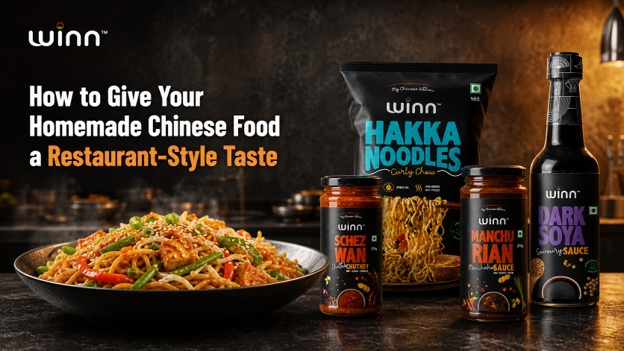
Why does Chinese food from restaurants taste intensely savoury, aromatic, and complete, while homemade food can sometimes feel flat even when the same ingredients are used? The difference is usually not a secret ingredient. It is how the cook builds, concentrates, and finishes each flavour.
Instead of adding several sauces at once, restaurant-style cooking gives every ingredient a specific job. One creates the savoury foundation, another provides heat, while vinegar, pepper and fresh aromatics brighten the final dish.
Start With a Clear Flavour Direction
Before switching on the stove, decide what the dish should taste like. Trying to make something spicy, sweet, sour and intensely salty at the same time can produce confused flavours.
Choose one leading profile:
-
Savoury and smoky: Hakka noodles or fried rice
-
Fiery and garlicky: Schezwan noodles or Schezwan fried rice
-
Sweet, spicy and tangy: Chilli paneer
-
Rich and glossy: Vegetable Manchurian gravy
-
Sharp and peppery: Hot-and-sour soup or stir-fried vegetables
This decision tells you which sauce should lead and which ingredients should remain in supporting roles.
Understand What Each Chinese Sauce Does
Restaurant-style Chinese food recipes become easier when you understand the function of each condiment.
Dark Soy Sauce: Colour and Savoury Depth
Dark soy sauce gives fried rice, noodles and Manchurian gravy their deep colour and umami character. It is concentrated, so a small amount is usually sufficient.
Winn Foods’ Dark Soy Shandar Sauce can be used in stir-fries, marinades, soups, noodles and rice dishes.
Chilli Sauce: Direct Heat
Red chilli sauce supplies bold chilli flavour and colour. Green chilli sauce tends to produce a sharper, fresher type of heat.
Either can be used in chilli paneer, stir-fried vegetables, dipping sauces and spicy noodles. Browse the Winn Foods Chinese sauces range to compare the available options.
Schezwan Chutney: The Main Flavour
Schezwan chutney is more than a source of heat. Its concentrated seasoning can become the primary flavour in fried rice, noodles, wraps and starters.
Because it already has a strong profile, pair it with a small amount of soy sauce and vinegar instead of several competing sauces.
Manchurian Sauce: Body and Balance
A Manchurian sauce supplies the sweet, spicy, and tangy base expected in Manchurian-style gravy. It can also be used as a glaze for paneer, tofu, mushrooms, or crispy vegetables.
Winn Foods’ Manchurian Sauce is suggested by the brand for dishes including vegetable Manchurian gravy, Manchow soup, and crispy baby corn.
Vinegar: The Final Lift
Vinegar cuts through oil, saltiness, and rich sauces. It should be noticeable without becoming the dominant flavour.
Add it close to the end of cooking. Prolonged heating can soften the fresh, sharp note that gives Indo-Chinese food its lively finish.
Use the Four-Layer Restaurant Flavour Method
Instead of pouring every condiment into the wok together, build the dish in four stages.
Layer 1: The Aromatic Base
Begin with hot oil and a small quantity of chopped ginger, garlic, green chilli or celery. Fry only until fragrant.
Burnt garlic creates bitterness, while undercooked garlic may taste harsh. Keep the ingredients moving and begin the next stage promptly.
Layer 2: The Savoury Foundation
Add vegetables, paneer, tofu or another protein before introducing dark soy sauce. This allows the main ingredients to cook and take on flavour without sitting in excess liquid.
Layer 3: The Lead Sauce
Add the sauce that defines the recipe: Schezwan chutney for Schezwan rice, chilli sauce for chilli paneer, or Manchurian sauce for gravy.
This is the main character of the dish. Other condiments should complement it rather than compete with it.
Layer 4: The Fresh Finish
Finish with vinegar, crushed pepper, celery leaves, toasted sesame seeds, or chopped coriander stems. These ingredients restore aroma and freshness after high-heat cooking.
Diagnose What Is Missing From Your Dish
When homemade Chinese food does not taste right, adding more of every sauce is rarely the answer. Identify the actual problem first.
The Dish Tastes Flat
It may need acidity or aroma rather than salt. Add a few drops of vinegar, freshly crushed pepper, or chopped celery.
It Tastes Salty but Still Incomplete
Too much soy sauce can produce saltiness without balance. Add unsalted vegetables, noodles or rice, followed by a small amount of vinegar.
The Sauce Is Watery
Let the liquid simmer briefly before thickening it. If needed, add a thin cornflour slurry gradually while stirring.
The Sauce Does Not Coat the Ingredients
The surface may be too wet, or the sauce may need a small amount of cornflour slurry. Paneer, tofu and vegetables should be properly drained before they enter the wok.
The Noodles Taste Heavy
The noodles may have been overcooked or covered with too much sauce. Use one lead sauce, a little soy sauce and a fresh finishing ingredient.
The Food Has Flavour but No Restaurant Aroma
Add pepper, vinegar, celery or sesame oil immediately before serving. Restaurant-style aroma often comes from the final few seconds of cooking.
Three Restaurant-Style Dish Transformations
Turn everyday meals into delicious restaurant-style dishes with simple ingredients and easy techniques. With the right sauces, seasonings, and cooking methods, you can instantly elevate the flavour and presentation of your favourite dishes.
Turn Plain Fried Rice Into Schezwan Fried Rice
Begin with cold rice and a small quantity of finely chopped vegetables. Add Schezwan chutney as the main seasoning, followed by a little dark soy sauce.
Finish with vinegar and chopped celery. Toss until the rice is evenly seasoned, but stop before it becomes soft or excessively dark.
Give Chilli Paneer a Glossy Coating
Lightly coat paneer with cornflour and pan-fry until the edges are crisp. Prepare a separate sauce with chilli sauce, dark soy sauce, vinegar, water and a small amount of cornflour slurry.
Add the paneer only after the sauce becomes glossy. Toss briefly so the coating remains on the paneer rather than soaking into it.
Upgrade a Quick Bowl of Hakka Noodles
Boil the noodles until just cooked, then drain and cool them. Stir-fry vegetables separately before adding the noodles and seasoning.
Winn Foods’ Chinese masala collection includes seasonings for Hakka noodles, fried rice, Schezwan fried rice, chilli paneer and Manchurian. These can provide a more defined recipe direction when you do not want to measure several individual seasonings.
Recreate Chinese Fast Food Texture at Home
Popular Chinese fast food depends heavily on texture. Chilli paneer needs crisp edges, fried rice needs separate grains, and noodles should remain springy.
Use these texture-focused techniques:
-
Dust paneer, tofu or vegetables lightly with cornflour before frying.
-
Let ingredients develop colour before moving them.
-
Keep sauces separate from fried components until serving time.
-
Add Manchurian balls to gravy immediately before eating.
-
Use cold rice instead of steaming-hot rice.
-
Cool boiled noodles before stir-frying.
-
Serve finished food immediately.
A dish can have the correct seasoning and still feel disappointing if everything has the same soft texture.
Use a Simple Sauce Ratio as a Starting Point
For approximately two portions of noodles, rice, or stir-fried vegetables, begin with:
-
1 teaspoon dark soy sauce
-
1–2 teaspoons of the lead sauce
-
½ teaspoon vinegar
-
2 tablespoons water
-
Pepper to taste
This is a starting framework, not a fixed restaurant formula. Sauce strength, portion size, and personal preference vary, so taste before adding more.
Serve It Like a Restaurant Dish
Presentation changes how food is experienced. Serve fried rice in a compact bowl, place noodles in a shallow dish,h and keep gravies glossy rather than overly thick.
Finish with one suitable garnish, such as:
-
Toasted sesame seeds
-
Chopped celery leaves
-
Thinly sliced green chilli
-
Crushed pepper
-
Coriander stems
Avoid adding several garnishes simply for colour. The finishing ingredient should also contribute flavour.
Frequently Asked Questions
H3: What gives restaurant-style Chinese food its distinctive taste?
The taste comes from layered seasoning, concentrated sauces, aromatics and a fresh finish. Dark soy provides savoury depth, chilli sauces add heat and vinegar balances richness.
Which sauces should a beginner buy first?
Dark soy sauce, chilli sauce and vinegar form a practical starting set. Add Schezwan chutney or Manchurian sauce according to the dishes you cook most frequently.
Why does my homemade Chinese food taste only like soy sauce?
You may be using too much soy sauce or treating it as the main flavour. Use a smaller quantity for savoury depth, then add a recipe-specific sauce, acidity and fresh aromatics.
How do restaurants make Chinese gravy glossy?
A controlled amount of cornflour slurry thickens the liquid and helps it coat the ingredients. The slurry should be added gradually to simmering sauce while stirring.
Can I prepare restaurant-style Chinese food without deep-frying?
Yes. Paneer, tofu, mushrooms, and vegetables can be shallow-fried, air-fried, or roasted before being tossed in sauce. The goal is to create a firm exterior that holds the coating.


